

5 Best Exhibitions from 2025
This article has been long overdue. 2025 was a year of good exhibitions. We have visited many including Noah Davis at the Barbican, Collect in Somerset House, The Venice Architecture Biennale, Salone Del Mobile, annual pilgrimage to PAD and Frieze London, the blockbuster Cartier at the V&A and so on.
We have shortlisted five exhibitions that stood out in our memory with their attention to detail, originality, curation and the quality of the artworks - designs. Here are the top five exhibitions in chronological order.
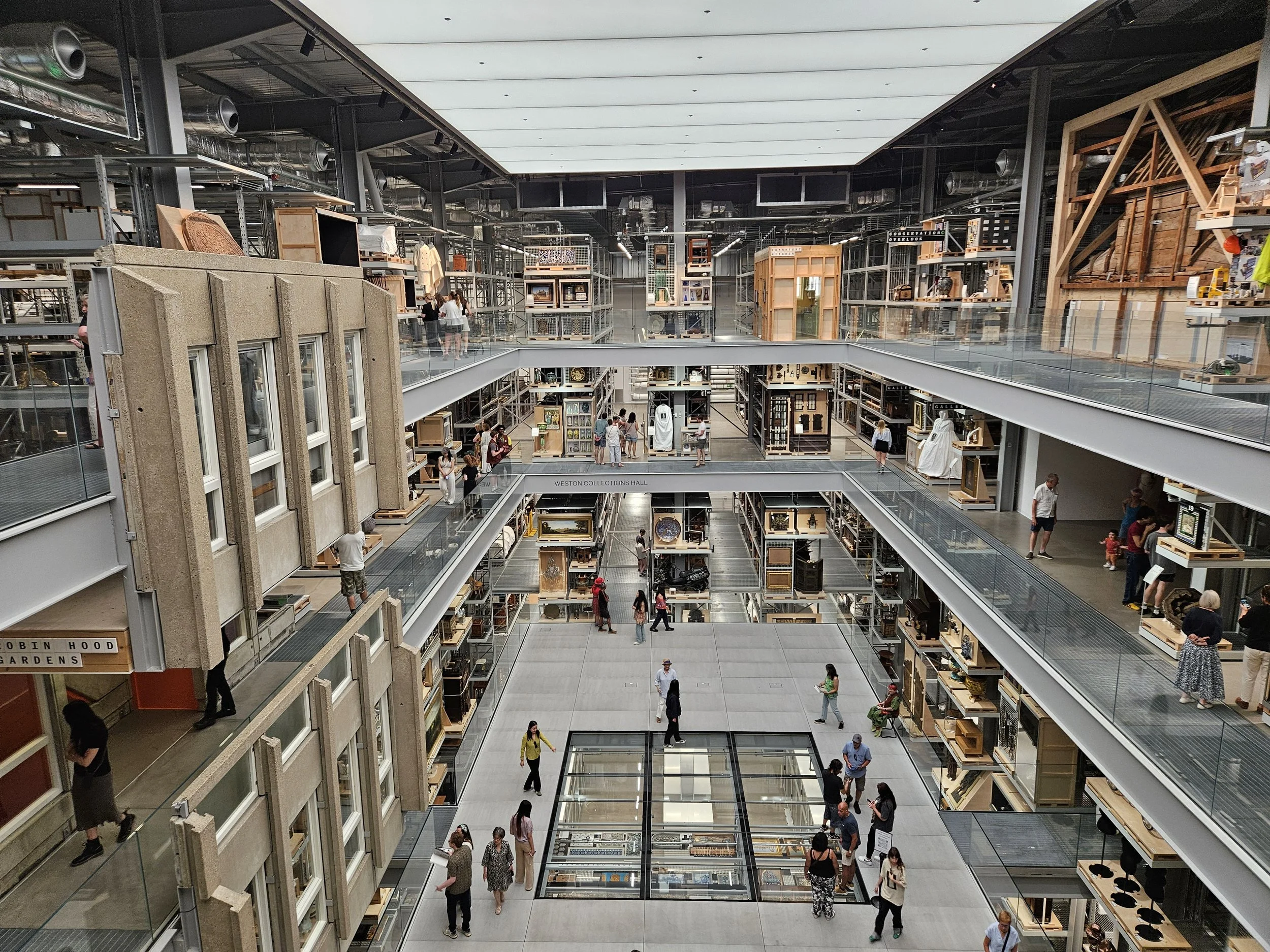
V&A East Storehouse, photo by Studio Sahil.
V&A East Storehouse, London, Spring 2025
The new extension of the Victoria & Albert museum is a fresh approach to displaying a wide array of artworks and design pieces. The museum even has a full office by Frank Llyody Wright installed in the museum space as part of the permanent collection. The historic community space ‘Robin Hood Gardens’ is included in the museum’s acquisitions. There are architectural façades and elements from the residential complex which was demolished in 2018. Robin Hood Garden’s lengthy process was created into an architectural case study which was exhibited in 2018 Venice Architecture biennale. These pieces are only accessible in the museum with a documentary created by Do Ho Suh.
The V&A East Storehouse also creates a welcoming environment for researchers and visitors to request collection viewing, upclose archival access and unique pieces from different time periods in one single accessible space. The museum’s approach to curatorial display is unique and definitely will reflect on the future museological studies.
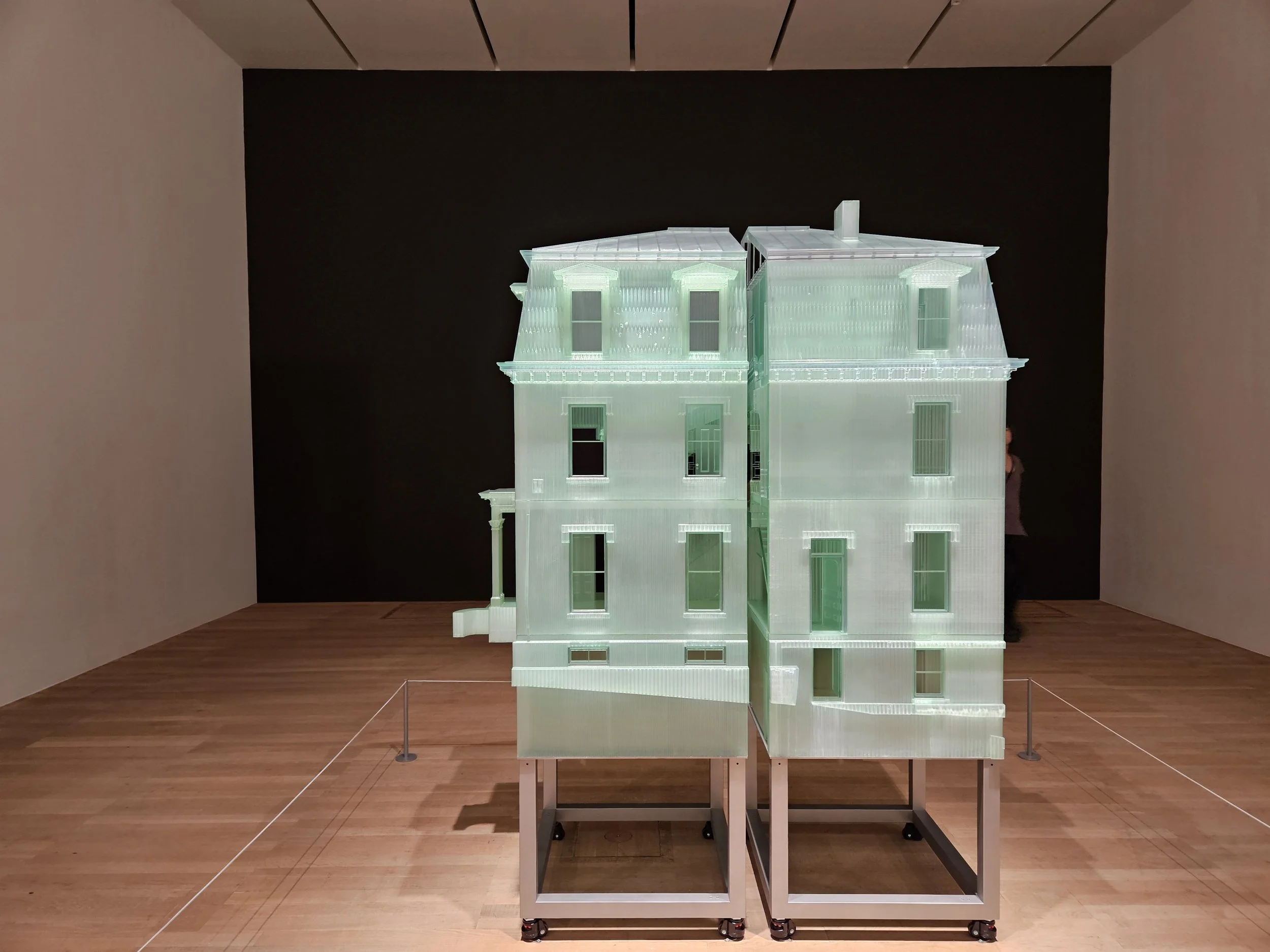
Do Ho Suh at Tate Modern, photography by Studio Sahil
The Genesis Exhibition: Do Ho Suh: Walk the House, Tate Modern, London, Summer 2025
This exhibition was one of the blockbuster exhibitions of the year for sure. What I really enjoyed is the multidisciplinary approach of the artist from two dimensional artworks to full size three dimensional installations which are also supported by film documentary, animated video and in-depth text.
As a RISD alumni and someone who spent her life in Providence, RI - the Benefit street artworks from the artist resonated the most with me. I saw the same building, which he created the artwork of everyday, on the way to my design studies. Living in different cities, having a life with multiple chapters that ‘home’ has different meanings and resonances, I had a personal connection to this exhibition.
The technicality of the artworks are impeccable and draws in the viewer to think about everyday items, how objects live in our memory and what connections we create with these objects. If you had a chance to stay a bit longer at this exhibition, the ‘Robin Hood Gardens’ documentary is shown on a large screen video - again connecting with the V&A east storehouse. This show demonstrates who much advance planning and detailed curatorial work was involved to deliver a high level exhibition.
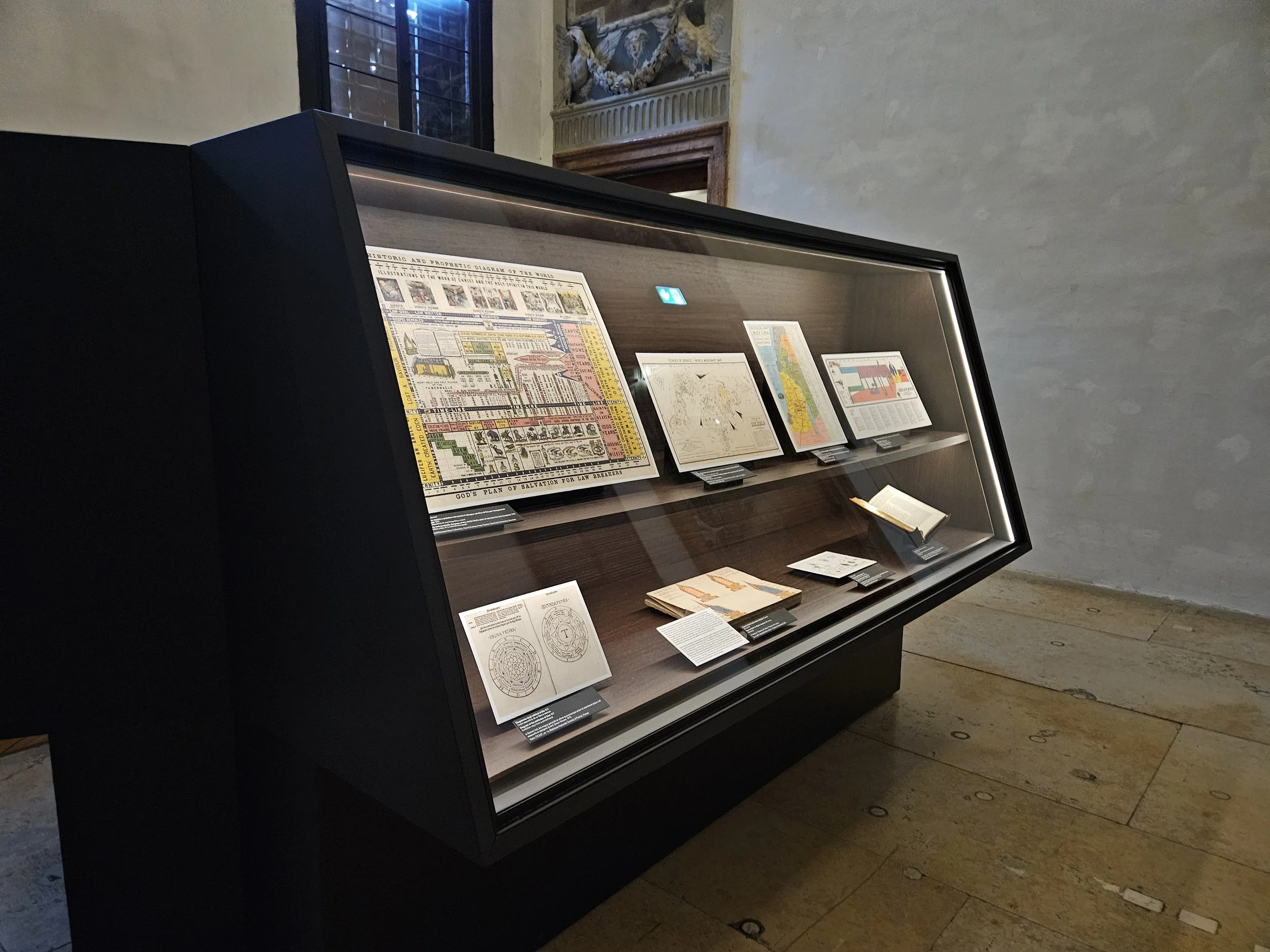
Diagrams exhibition, photography by Studio Sahil
Diagrams - A project By OMA, Fondazione Prada, Venice, September 2025
Diagrams was a technical exhibition on data visualisation. Inside the beautiful palazzo of Fondazione Prada, visitors would enter the first floor to see lit display cabinets from one end of the hall to the other end. The exhibition includes historical maps by Alexander Von Humbolt, charts, medical data, information in different languages and from different time periods, ancient to modern data sets - all neatly organised in the central room.
“In my view, the diagram has been an almost permanent tool. For example, in the early stages of our research, we discovered three-dimensional diagrams from South Africa dating back to 40,000 BCE, as well as wood-carved maps of the Greenlandic coastline made on the island of Ammassalik. This demonstrates that the diagram is an enduring form of communication that adapts to whatever medium exists at the time. Regardless of the medium, a diagram serves didactic (explanatory) or suggestive (persuasive) purposes. This means that it not only exists by default in any new medium but can also be applied to virtually any area of human life. Fashion, religion, or the history of social inequality can be interpreted as a diagram. I deeply enjoy this interdisciplinary aspect of the diagram, its invariable attribute—its independence from language (words) makes it one of the most effective forms of representation.”
-Rem Koolhas
The other relevant themes from different decades are distributed throughout the smaller rooms of the exhibition. The level of research, refinement and how well the production of the displays made this exhibition memorable. It also encouraged critical thinking and curiosity to discover more about the subject materials.
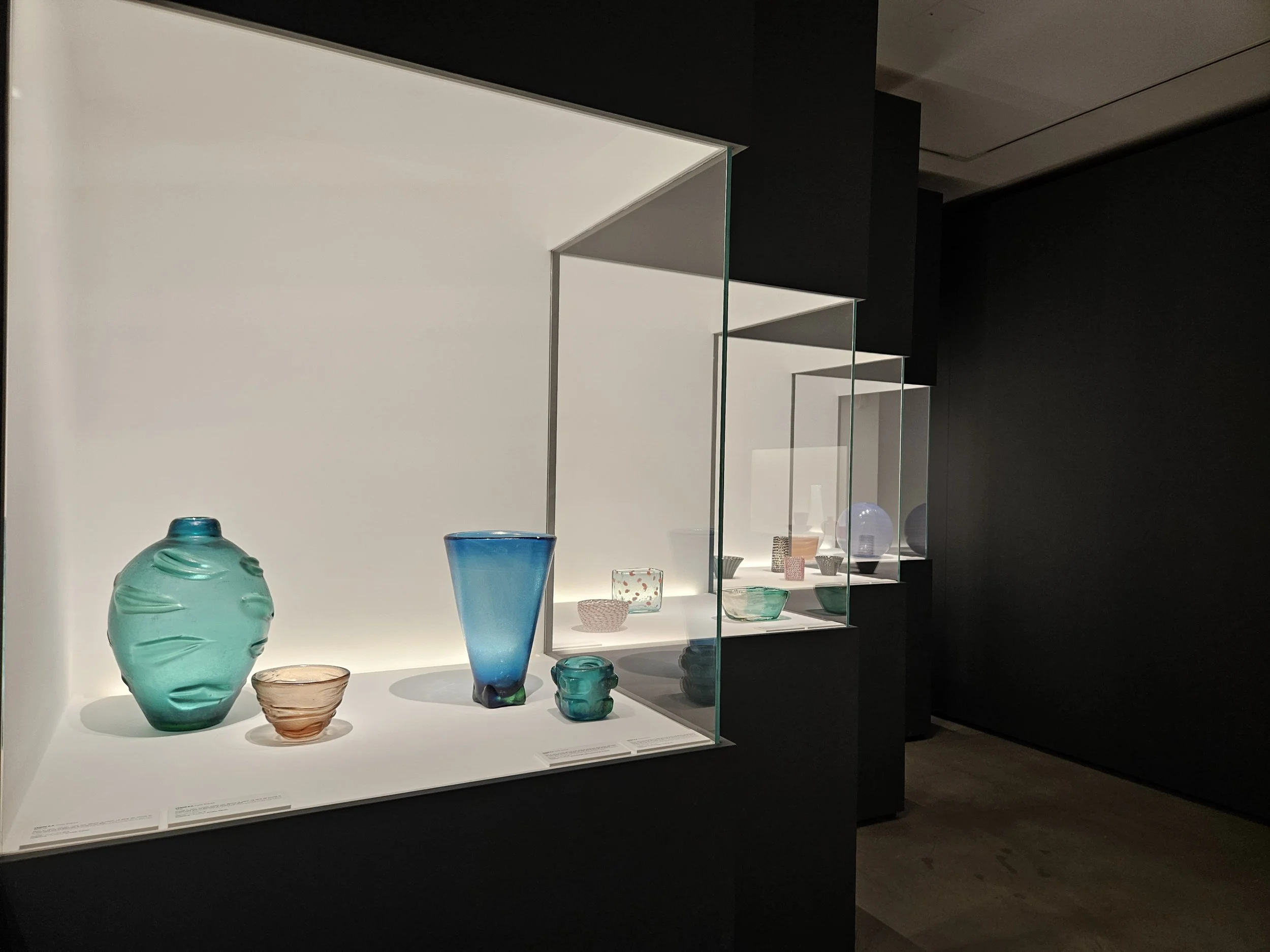
1932-1942 Murano Glass, photography by Studio Sahil
1932-1942 Murano Glass and the Venice Biennale, La Stanze Del Vetro, September 2025
As a design studio focused on glass, this exhibition was one of the must-visit ones from the Venice Glass Week 2025. On the island of San Giorgio Maggiore, La Stanze Del Vetro showcased an archival collection of Murano Glass including Barovier Toso, Venini and Salviati. The exhibition is curated by Marino Barovier.
It included some of the beautifully made pieces designed by Carlo Scarpa. This exhibition stood out its well organised chronological order, well lit display setup and ease of information. Whilst it was giving technical details, it was not overpowering the artworks. The glass vessels stood out in their true form and colour with carefully calibrated lighting and represented the unique skills of the craftspeople who had made them.
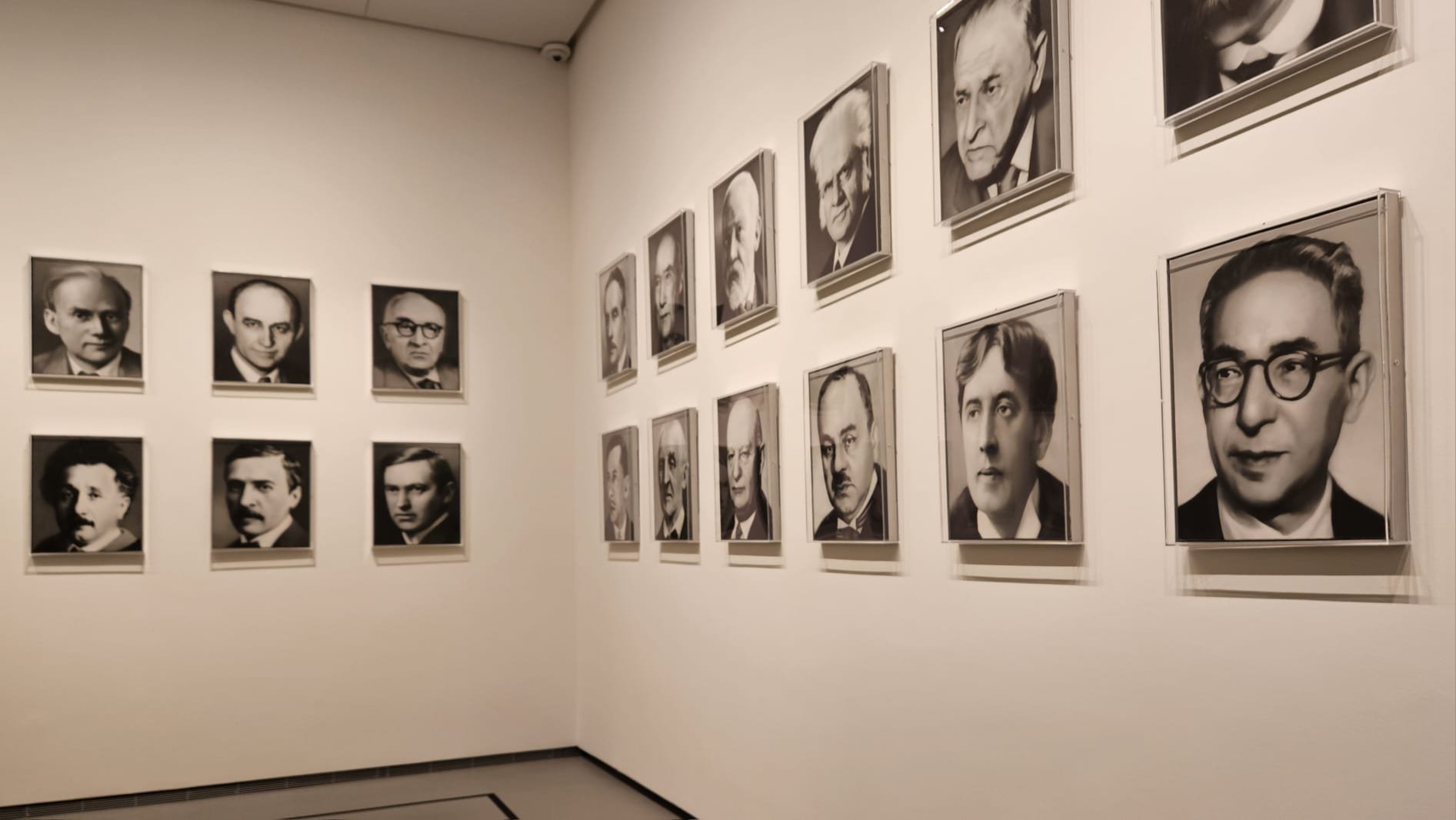
Early works of Gerard Richter, photography by Studio Sahil
Gerard Richter, Fondation Louis Vuitton, November 2025
This exhibition was one of the most extensive retrospective showcases of the contemporary artist Gerard Richter. The exhibition included early figurative portraits, realistic portraits, photography, models, sketches and larger abstract paintings, sculptures and installations. It also included collaborations, the visualisation of the artist’s thought process and a detailed timeline of his career.
The artworks that stayed in my memory were portrait paintings of people the artist had looked up to in his early years and the Birkenau series (final paintings), which I found difficult to stay with for how conceptually powerful they are as a series on WW2.
Seeing all of these artworks in the ambitious building design by Frank Gehry, just three weeks before his passing was an unusual coincidence to reflect on legacy. The exhibition is still open until March and definitely worth a visit to see the progression of a life long career of an artist.